
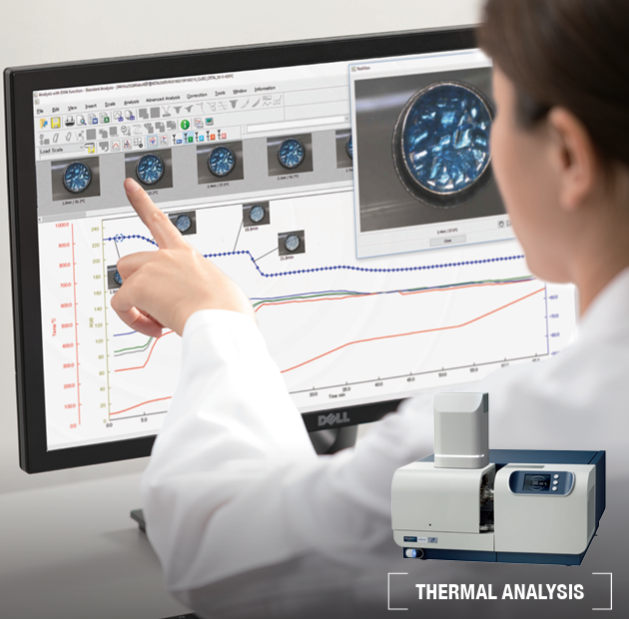
Thermal analysis is an important technique for understanding how materials behave when exposed to different temperature conditions. It is widely used in industries such as polymers, pharmaceuticals, chemicals, food, and energy to evaluate material properties, thermal stability, and product quality.
Among the most commonly used thermal analysis techniques are Thermogravimetric Analysis (TGA), Differential Scanning Calorimetry (DSC), and Simultaneous Thermal Analysis (STA). Although they are all used to study the thermal behavior of materials, each technique provides different types of information.

1. What Is TGA (Thermogravimetric Analysis)?
TGA measures changes in a sample's mass as a function of temperature or time under a controlled atmosphere.
It is commonly used to determine moisture content, volatile components, thermal decomposition, oxidation behavior, and residual ash content.
For example, in the polymer industry, TGA can help evaluate the thermal stability of plastics and determine the amount of inorganic fillers in a material.
2. What Is DSC (Differential Scanning Calorimetry)?
DSC measures the difference in heat flow between a sample and a reference as temperature changes.
Unlike TGA, which focuses on mass changes, DSC identifies thermal transitions and the amount of heat absorbed or released by a material.
Typical applications include determining melting temperature, glass transition temperature (Tg), crystallization temperature, and enthalpy changes.
DSC is particularly useful in polymer characterization, pharmaceutical research, and material development.
3. What Is STA (Simultaneous Thermal Analysis)?
STA combines two thermal analysis techniques in one measurement. Depending on the instrument configuration, it simultaneously measures mass changes through TGA and thermal events through DTA or DSC.
This allows users to observe whether a material loses mass during a thermal event, helping provide a more comprehensive understanding of its thermal behavior.
For example, when analyzing a polymer, STA can help identify decomposition temperatures while simultaneously detecting associated thermal events.
Understanding the Differences
Which Technique Should You Choose?
The choice depends on the type of information required from the sample.
- Choose TGA when you need to understand mass loss, decomposition, or residual content.
- Choose DSC when you want to investigate thermal transitions and heat flow.
- Choose STA when you need both mass change and thermal behavior information in a single experiment.
Discover Hitachi Thermal Analysis Solutions
Hitachi High-Tech offers thermal analysis instruments designed to support material characterization across different industries. Its STA solutions enable simultaneous thermal measurements, helping researchers and quality control professionals obtain more comprehensive insights into material properties.
Understanding the differences between TGA, DSC, and STA is an important first step in selecting the right analytical technique for your laboratory.
For more information about Hitachi Thermal Analysis solutions, contact **Galleon Trifecta Instrumenindo**.